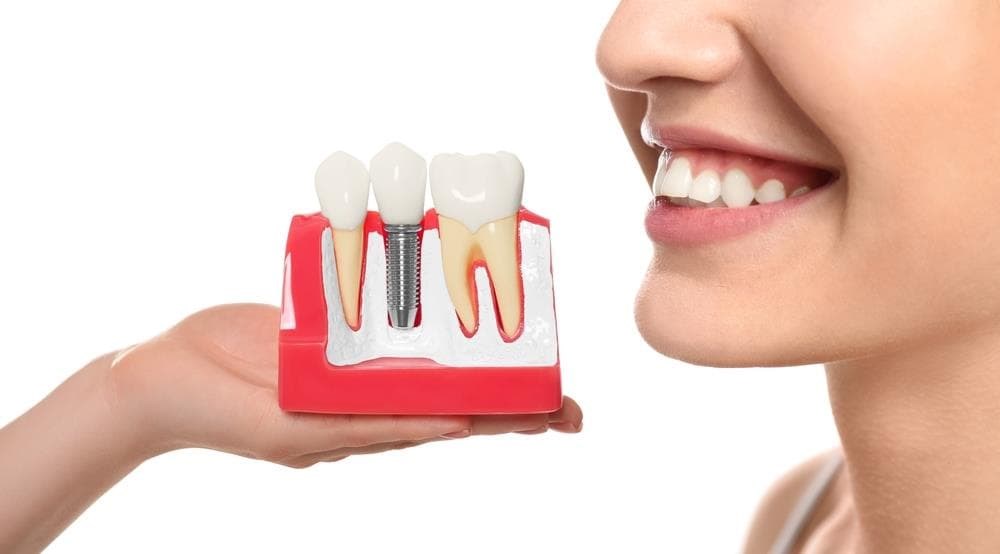




The dental implants They are designed to provide a stable and long-lasting solution to the loss of one or more teeth. However, once the treatment has been carried out, daily care is essential. Having an implant does not mean that we can neglect oral hygiene in that area.
Although a dental implant cannot develop tooth decay in the same way as a natural tooth, the tissues surrounding it can be affected by the build-up of bacterial plaque. For this reason, the interdental hygiene around implants It plays a particularly important role in maintaining healthy gums and supporting their long-term health.
An implant cannot develop tooth decay, but the tissues surrounding it need to be kept clean to stay healthy.
Why is oral hygiene so important around dental implants?
A dental implant integrates into the bone and is surrounded by tissue that we must keep in good condition.
When bacterial plaque builds up around the denture and the implant, it can cause inflammation of the surrounding tissues.
Conventional brushing is essential, but there are certain areas, particularly between the teeth and around the implants, which a standard toothbrush may struggle to reach properly.
This is precisely where interdental hygiene becomes particularly important.
What can happen if plaque builds up around an implant?
The build-up of bacterial plaque can cause inflammation around the implants. Depending on the tissues affected and how the problem develops, different scenarios may arise.
Peri-implant mucositis
The peri-implant mucositis It is an inflammation of the soft tissues surrounding the implant, without any loss of the bone that supports it.
One of the most common symptoms is bleeding gums. If detected early and managed with proper oral hygiene and professional treatment, it can be controlled.
Peri-implantitis
The peri-implantitis It is a more advanced condition in which, in addition to inflammation, there is progressive loss of the bone supporting the implant.
If left untreated, it may compromise the stability of the implant.
That is why it is so important not to wait until you feel pain before seeing a dentist. Problems with implants can start without causing any obvious discomfort.
Brushing your teeth isn’t always enough
Brushing properly at least twice a day remains the cornerstone of good oral hygiene, including for people with dental implants.
However, the characteristics of an implant-supported crown, a bridge or a denture can lead to areas where food debris and bacterial plaque build up.
A conventional toothbrush mainly cleans the accessible surfaces of the teeth, but may not reach certain interdental areas properly.
That is why it is necessary to supplement brushing with specific tools.
How to practise proper interdental hygiene with implants
There is no single technique that is suitable for all patients. The type of implant, the prosthesis, the space between the teeth and the characteristics of the gums determine which system is most appropriate.
Interdental brushes
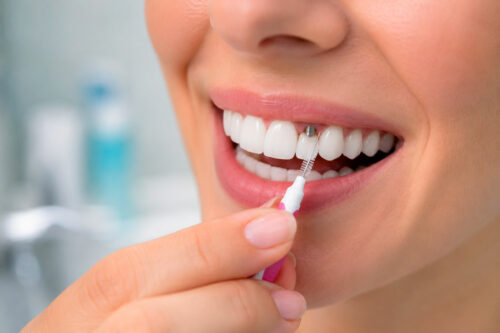
The interdental brushes They are one of the most useful tools for cleaning the spaces between teeth and implants.
They come in different sizes, and it is important to use the right one for each area. A brush that is too small may not clean properly, whilst one that is too large could be uncomfortable or damage the gums if used incorrectly.
A professional can advise you on the most suitable size and technique.
Dental floss
In certain cases, it may also be used dental floss specifically designed for implants and dentures.
It allows access to narrow areas where an interdental brush cannot reach and helps to remove plaque that has built up around certain restorations.
Oral irrigator
The oral irrigator uses a jet of pressurised water to help remove food debris from hard-to-reach areas.
It can be particularly convenient for patients with multiple implants, bridges or dentures, but it should be considered a a complement to mechanical cleaning and not necessarily a substitute for interdental brushing where appropriate.
Do you need to clean underneath implant-supported dentures?
Yes. In cases where several implants support a bridge or a denture, there may be gaps between the denture and the gums that require special attention.
Food debris and plaque can build up in these areas even if the dentures appear to be clean.
Depending on the design of the prosthesis, the following may be used:
- Interdental brushes.
- Specialised dental floss.
- Specialised brushes.
- Oral irrigators as a complementary treatment.
The dentist or dental hygienist can show the patient how to clean these areas properly and which tools to use.
How often should you clean between your teeth?
Oral hygiene between teeth and implants should form part of the daily oral care routine.
The frequency and specific technique will depend on each patient’s needs, but the important thing is to prevent plaque from building up around the implant over long periods.
Spending a few extra minutes on these areas can make a significant difference to the maintenance of peri-implant tissues.
Warning signs relating to a dental implant
As well as maintaining good oral hygiene, it is important to keep an eye out for any changes around the implants.
It is advisable to consult your dentist if you notice any of the following signs:
- Frequent bleeding from the gums.
- Swelling or redness around the implant.
- Discomfort when brushing.
- A bad taste or a persistent unpleasant odour.
- Suppuration.
- Visible changes to the gums.
- A sensation of movement in the prosthesis or implant.
These symptoms do not necessarily mean that there is a serious problem, but they do warrant a professional assessment.
Regular check-ups are also part of implant care
Good hygiene at home should be complemented by regular dental check-ups.
During these check-ups, the condition of the tissues surrounding the implants can be assessed, the prosthesis can be checked, and any signs of inflammation or plaque build-up can be detected before they progress.
In addition, where necessary, professional maintenance procedures tailored to patients with implants can be carried out.
The frequency of check-ups does not necessarily have to be the same for everyone. Factors such as a history of periodontal disease, oral hygiene, smoking, the number of implants or the characteristics of the dentures may mean that more frequent check-ups are recommended.
Common mistakes in implant hygiene
Certain habits can reduce the effectiveness of daily hygiene.
To think that an implant requires less care than a tooth
Precisely because we want to keep it in good condition for many years to come, it requires a regular maintenance routine.
Clean using a standard brush only
Brushing is essential, but it can leave plaque build-up in the spaces between the teeth and underneath certain types of dentures.
Use any size of interdental brush
Choosing the right size makes cleaning easier and more comfortable.
Waiting until you feel any discomfort
Inflammation around an implant may initially develop without causing any pain. Regular check-ups enable changes to be detected before the patient is aware of them.
How long can a dental implant last?
There is no exact timeframe that applies to all patients. Implants can last for many years, but their longevity depends on a number of factors.
These include:
- Quality of oral hygiene.
- Gum and bone health.
- Professional servicing and maintenance.
- Smoking.
- The patient’s general medical conditions or illnesses.
- Bruxism and other forms of overuse.
- Characteristics of the treatment carried out.
That is why, once an implant has been fitted, an equally important stage begins: its long-term maintenance.
Looking after your implants also means looking after your gums
Proper interdental hygiene is not just about keeping the visible part of the denture clean. Its real aim is to control bacterial plaque and protect the tissues supporting the implant.
Brushing, flossing and professional check-ups together form the basis of good oral care.
At Dentsana Clinic We place particular emphasis on monitoring implant treatments and teaching each patient the most appropriate oral hygiene techniques for their individual situation.
Because carrying out the treatment correctly is only part of the process: Looking after your implants afterwards is essential to keeping them healthy for as long as possible.
Frequently asked questions about oral hygiene and dental implants
Do dental implants need to be cleaned in the same way as teeth?
They require the same rigorous daily oral hygiene, although the techniques and tools may vary depending on the type of implant and prosthesis.
Can I use interdental brushes if I have implants?
They are a particularly useful tool for many patients. It is advisable for a healthcare professional to recommend the correct size and explain how to use them properly.
Can an implant get a cavity?
No. The material used for the implant and the crown does not develop caries in the same way as a natural tooth. However, the tissues surrounding the implant can become inflamed and develop peri-implant diseases.
Does a water flosser replace an interdental brush?
Not necessarily. A water flosser can be a very useful aid, particularly with certain types of dental prostheses, but it should not be assumed that it replaces the mechanical cleaning recommended by a dental professional.
Why are my gums bleeding around an implant?
Bleeding may be linked to tissue inflammation and should be investigated, particularly if it occurs repeatedly.