




The 3D technology in dentistry has transformed the way in which many dental treatments are diagnosed and planned. Thanks to these digital tools, it is now possible to obtain a much more accurate view of the patient’s mouth, enabling more comprehensive diagnoses and more reliable treatment planning.
At Dentsana Clinic We use 3D technology that enables us to work with greater precision, improve the patient experience and offer more predictable treatments.
What is 3D technology in dentistry?
The application of 3D technology to dentistry makes it possible to obtain three-dimensional images of teeth, bones and oral structures, providing much more detailed information than traditional X-rays.
This type of technology makes it possible to analyse the mouth from different angles and plan treatments with millimetre precision.
Among the most widely used tools in digital dentistry are:
-
3D intraoral scanner
-
Three-dimensional digital radiology
-
Digital treatment planning
-
Digital design and manufacture of dental components
Benefits of 3D technology for patients
The use of digital technology in dentistry offers numerous benefits for both diagnosis and treatment.
More accurate diagnoses
Three-dimensional images make it possible to detect dental, bone or gum problems more clearly, facilitating more reliable clinical decisions.
Personalised treatment planning
Each treatment can be planned digitally before it is carried out, which makes it possible to predict the outcome and reduce uncertainty.
Greater comfort for the patient
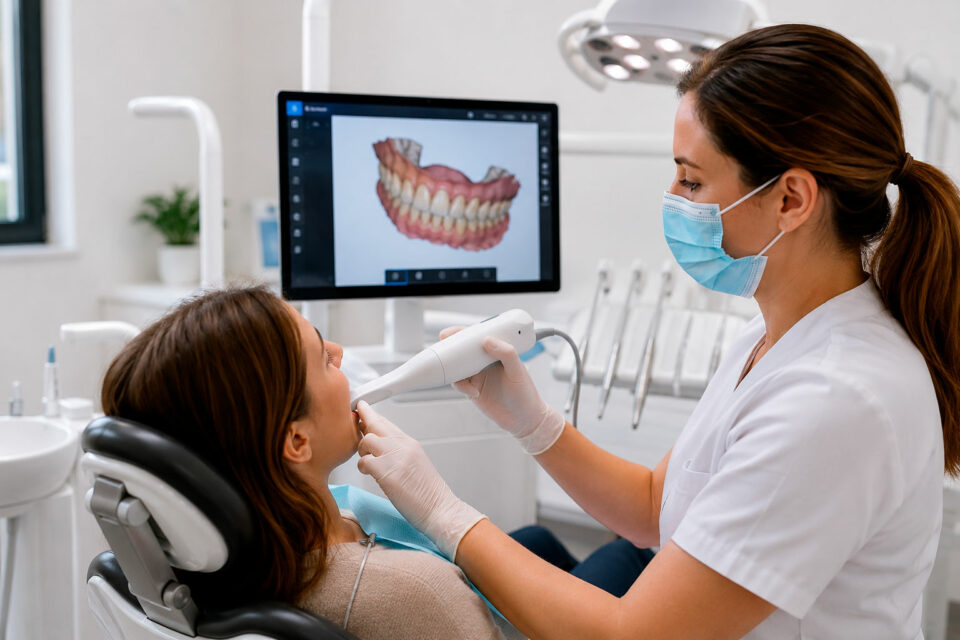
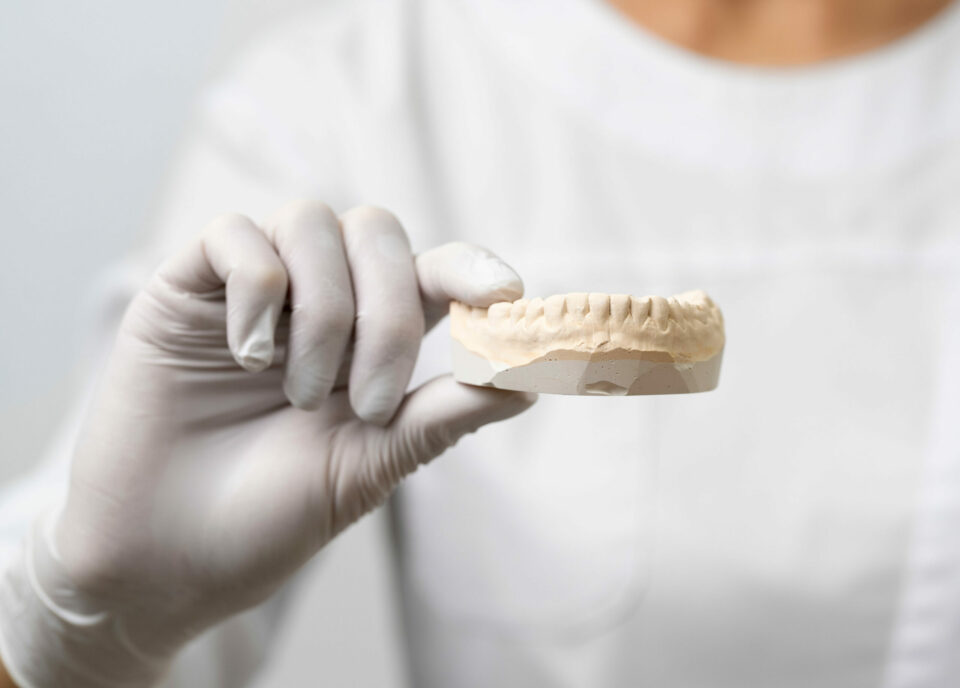
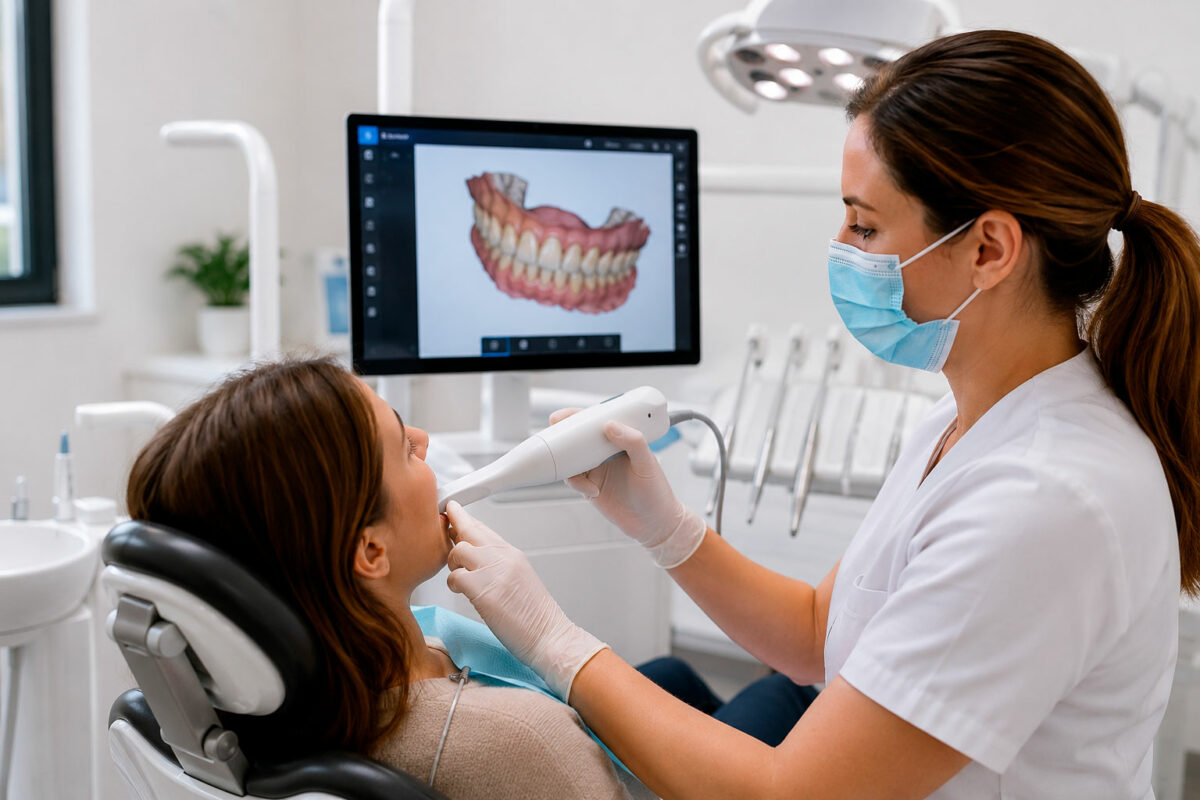
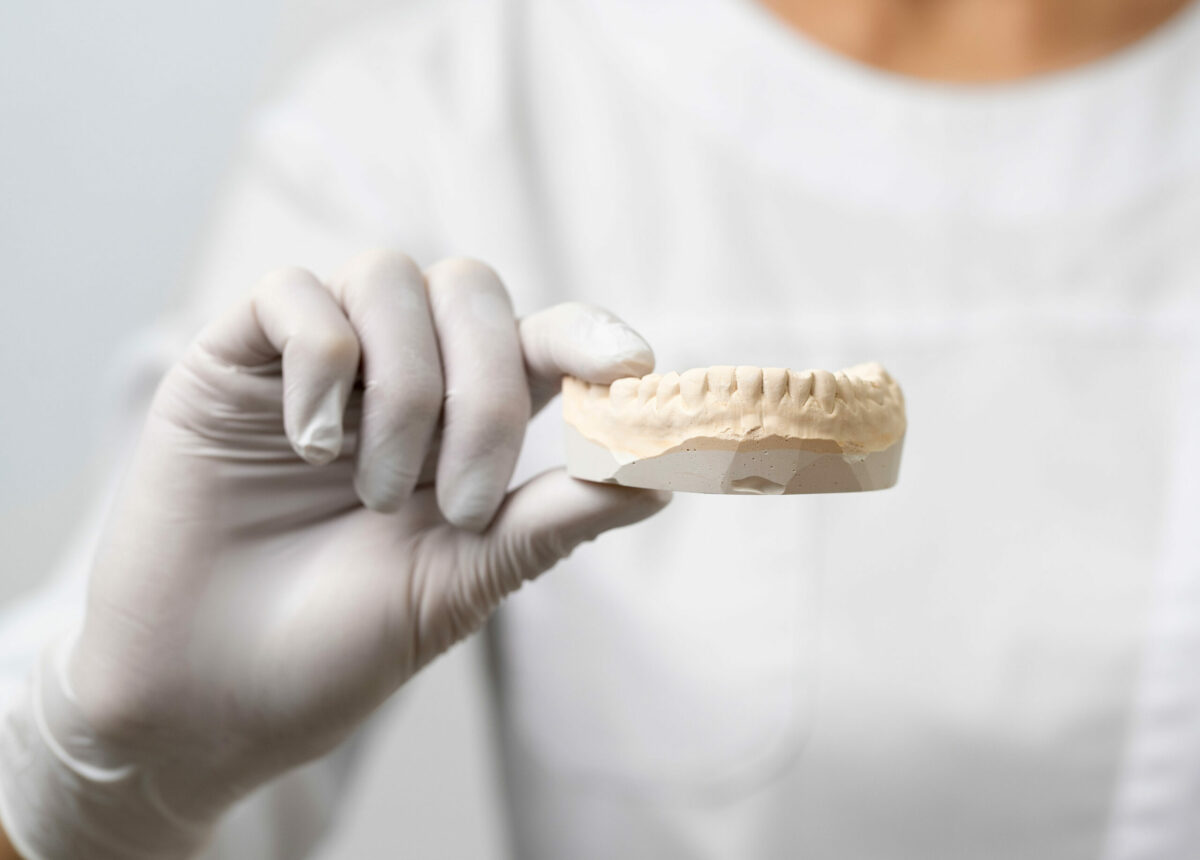
Thanks to intraoral scanners, in many cases it is no longer necessary to use traditional dental impressions with impression material, which can be uncomfortable.
Faster and more predictable treatments
Digital planning makes it possible to optimise procedures and improve accuracy in treatments such as implants, orthodontics and dental restoration.
How 3D technology is used in dentistry
Digital dentistry is used in various areas of dental treatment.
Diagnosis and planning for dental implants
3D technology enables the volume and quality of the bone to be analysed before an implant is placed, facilitating safe and accurate planning.
Digital orthodontics
Intraoral scanners enable orthodontic treatments to be planned with great precision and allow the progression of the smile to be simulated throughout the course of treatment.
Dental restoration and prosthetics
Crowns, veneers or dentures can be digitally designed to fit the patient’s anatomy precisely.
Comprehensive bite assessment
Digital technology makes it easier to analyse occlusion and detect any potential imbalances that could affect jaw function.
3D intraoral scanner: a new way of taking dental impressions
One of the most significant advances in digital dentistry is the 3D intraoral scanner. This device enables an accurate digital image of the patient’s mouth to be captured in just a few minutes.
Its key advantages include:
-
Abolition of traditional moulds
-
Greater accuracy in taking impressions of the mouth
-
Immediate display of the result
-
Greater comfort during the procedure
Furthermore, the scan allows a digital model of the patient’s mouth to be saved, which makes it easier to monitor and plan future treatments.
Digital technology and modern dentistry
The introduction of digital technology does not replace the professional’s expertise, but it does become an essential tool for improving diagnosis and treatment planning.
In modern dentistry, the combination of clinical expertise and advanced technology It enables safer, more precise and personalised treatments to be provided.
At Dentsana Clinic We are committed to innovation and technology as a fundamental part of patient care. The use of 3D technology enables us to examine each case in greater detail and plan personalised treatments.
Our aim is to provide dental care that is more precise, comfortable and tailored to each patient’s needs.